STRENGTH TRAINING
Why Push-ups?
The push-up is an excellent barometer of strength and fitness. It tests the whole body, engaging muscle groups in the arms, chest, abdomen, hips, and legs by requiring the body to be taut.
By following the progressive push-up and plank training plan provided, you will see a noticeable increase in your strength by the end of six weeks.
Push-up Form
Lie prone (facing downward) on the ground with hands placed as wide as shoulder width (or slightly wider) with fingers pointing forward. Keeping the body straight, heels and toes together, lower body to the ground by bending arms at the elbows. Raise the body up off the ground by extending the arms. Bodyweight should be lifted by the arms – not your trunk, stomach, or lower half of your body; imagine a straight line running from your head down to your ankles.
As you practice push-ups, maintain good form, and don't hold your breath. If you start to feel shaky, take a few deep breaths and regain your composure before starting again. Alternative Push-ups If you cannot do five consecutive push-ups, you may use alternative (easier) push-ups until your strength improves.

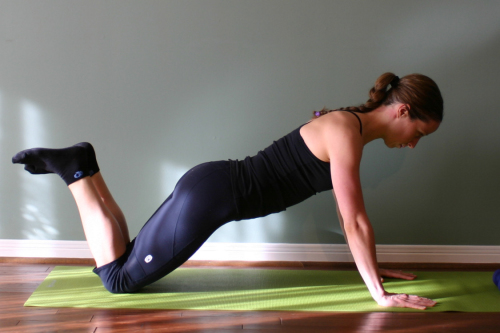
- Knee push-ups – reduces lifting load by about 50% on your knees, while still keeping a straight line from neck to torso
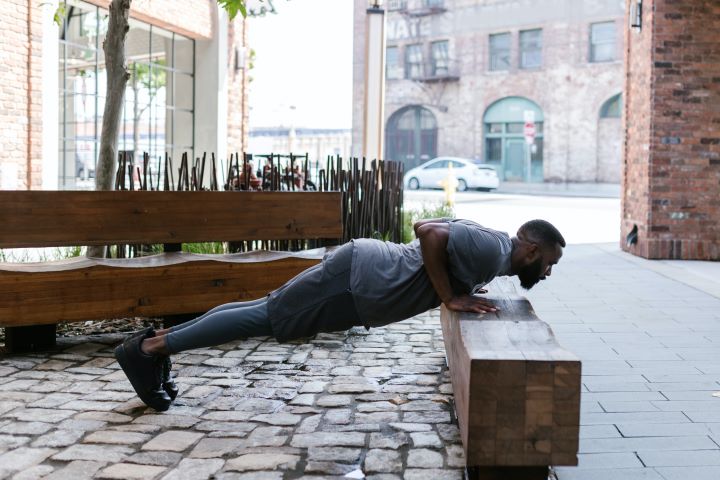
- Bench push-ups – use a low bench or chair to support your arms while you perform either regular push-ups or “knee” push-ups. Note: Please be sure the bench or chair is stable before you perform the push-ups.
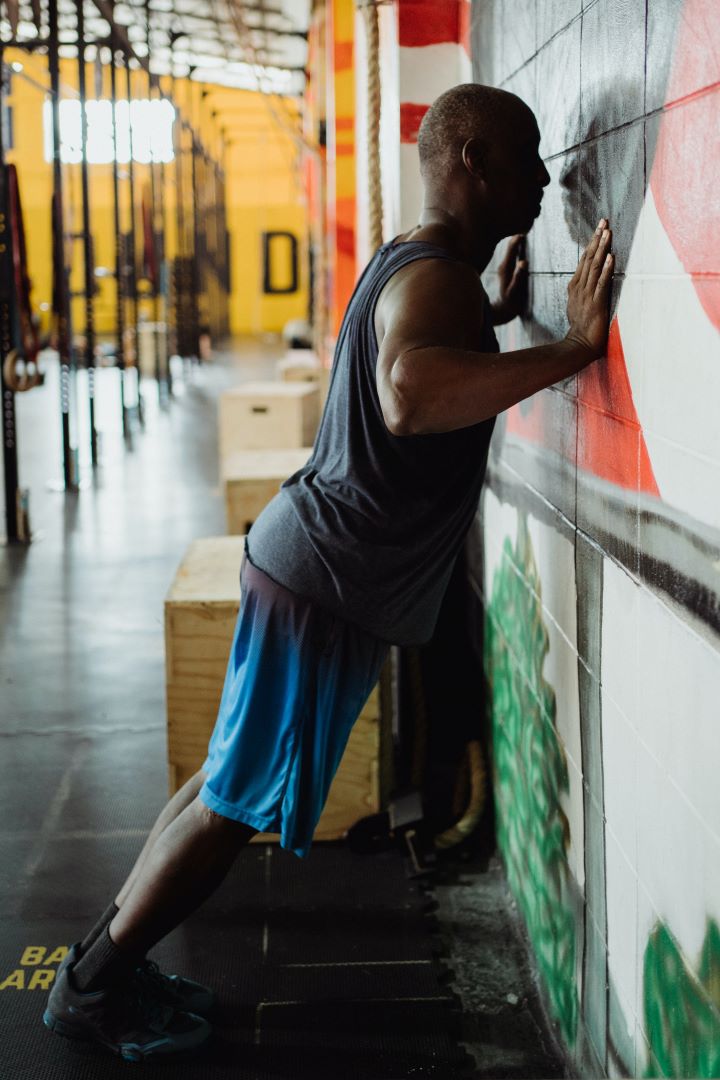
- Wall push-ups – if the above options are still too challenging, this variation is the easiest. The “wall” push-up reduces the pressure on the arms, upper back and abs. The closer you stand to the wall, the easier it is, but you still want to be aware of your body alignment. As you gain strength, move your feet slightly further away from the wall to make the workout more challenging, and then move to the “bench” or “knee” style push-ups and, finally, the regular push-up.